Health › Tend¶
Tend is the first mode of the Health surface. It answers one question: which notes need me, and what is each one missing? Every note appears once, with everything it lacks as chips, and clicking a row opens the note and This note in the right sidebar, already on the fix.
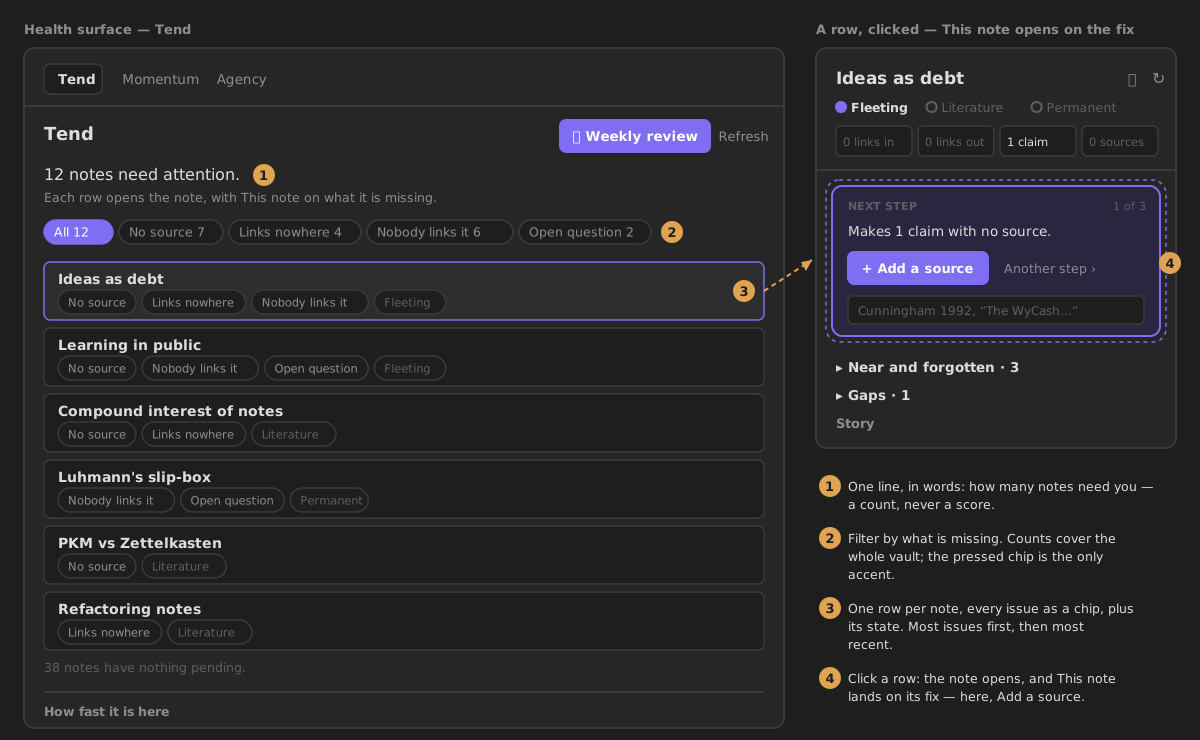
It replaced the old Health mode (#644, epic #639). That mode diagnosed and never helped: it said 37 orphans, could list the same note three times (in the summary, as unreferenced debt and as an orphan), and its Connect now button only opened the note. Tend closes the loop.
Opening it¶
- Ribbon menu › Health opens the Health surface on Tend.
- Command palette — Show health. The older Show slip-box health and Show knowledge dashboard commands still work and land here; their ids did not change.
- A workspace saved on the old
healthmode switches to Tend in place.
What a row says¶
Each row is one note: its name, one chip per issue in this order, and a chip with its lifecycle state.
| Chip | It means | It is the same answer as… |
|---|---|---|
| No source | the note makes a claim and cites nothing | the next move add a source |
| Links nowhere | the note links to no other note | the next move connect |
| Nobody links it | no other note links to it | the unreferenced debt category |
| Open question | it asks a question nothing has answered yet | the open question debt category |
Tend defines none of these itself: it reads suggestNextMoves() and the knowledge-debt categories as they are. So when a row says No source, the next-step card in This note is guaranteed to offer Add a source. One consequence: a note whose only link points to itself counts as linked, because both of those functions count it.
Rows are ordered by number of issues (most first), then most recently changed, then path. The list shows the first 200 and says +N more notes below; the counts always describe the whole vault. Under the list, a faint line says how many notes have nothing pending.
Nothing here is a grade (§XII): no score, no percentage, no colour for an issue. The only accent is the filter you pressed.
Filtering¶
The chips above the list — All and one per issue that some note has, each with its count — filter the rows. Empty chips are not drawn. The filter is not remembered: Tend opens on All.
Where a row takes you¶
Clicking a row (or pressing Enter on it) opens the note in the main area and This note in the right sidebar, landed on the fix for the row's first issue, or for the filter's issue when a filter is on:
| Issue | This note opens on |
|---|---|
| No source | the next-step card, on Add a source |
| Links nowhere | the next-step card, on Connect |
| Nobody links it | Near and forgotten — the notes to link it from |
| Open question | Gaps, where the question is listed |
This is the hand-over contract openNoteCompanion(app, { path, focus, move }) described on the This note page.
The header and the pass¶
- Weekly review is the header's one primary action: it reads what this list shows and writes the note that summarises it (second-brain review). Refresh sits beside it.
- Reading notes: N of M — Stop. When the inline-relation enrichment pass is running, its progress and a Stop button sit right under the lede. Stopping leaves the model consistent.
- The timings from this vault (how long the index and the analyses took on this machine) are not here: they are read-only rows in Settings › Advanced since #645. Health's other mode, Practice, shows what you have been doing.
States¶
| State | When | What you see |
|---|---|---|
| Indexing | the knowledge index is still building | one line, no list |
| Error | the vault could not be read | one line; the error is logged |
| Clear | no note has any issue | No note needs attention.; no chips, no list; the weekly review stays |
| Ready | at least one note needs you | the lede (12 notes need attention.), the chips and the list |
Tend refreshes itself shortly after the vault changes, and keeps the list you are looking at when nothing changed.
What left, and where it went¶
| The old Health mode had… | Now |
|---|---|
| A summary line (scanned · orphans · dead ends) | Tend's lede and chip counts |
| Connectivity and today panels | Home shows what to process, open questions and gaps; contradictions are in This note's In tension and Cultivate |
| The knowledge-debt score and its bar | gone from the screen — a score of your vault is a grade (§XII). Its categories are two of Tend's chips |
| Knowledge balance percentages | gone; its one actionable nudge (add sources) is the No source chip |
| Separate orphan and dead-end lists | one row per note, with Links nowhere / Nobody links it chips |
| Unexamined ideas | Home's re-engage recommendation |
| Connect now (only opened the note) | a row opens the note and This note on the fix |
Every one of those projections is still available to scripts through zf.knowledge (debt, balance, dashboard, health …), and Tend's own list is zf.knowledge.tend().
Architecture¶
deriveTend(model)                      (pure State projection, once per model revision)
  ← suggestNextMoves(model, path)        no source · links nowhere
  ← computeKnowledgeDebt(model)          nobody links it · open question
  → { rows, counts, clear }              ordered; tendFocus(row, filter) → where a row lands

TendRenderer (Health surface, mode "tend")
  debounced resolved/rename/delete → recompute (skipped when the revision did not move)
  header: weekly review (primary) + refresh · lede · pass row · chips · ≤200 rows · clear line
  row click → openLinkText(path) + openNoteCompanion(app, { path, focus, move })
Performance budget: analysis.tend.10k — the list over 10,000 notes, uncached (budgets).